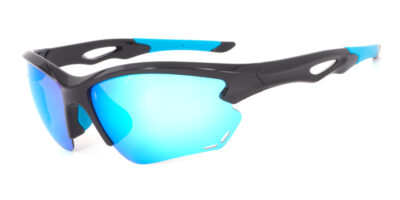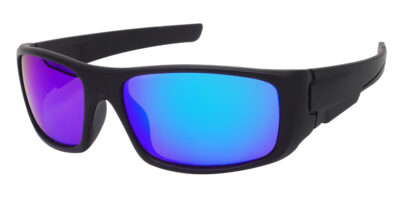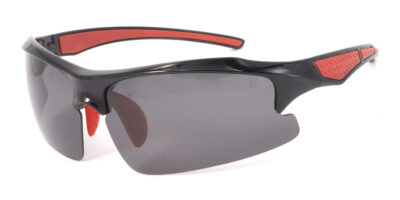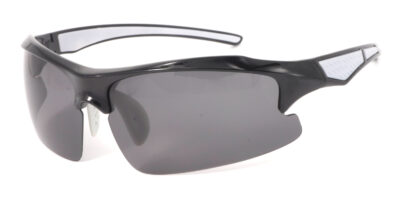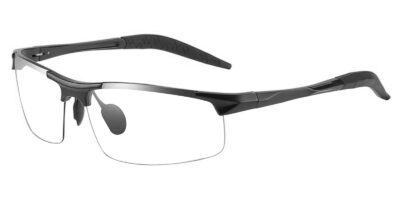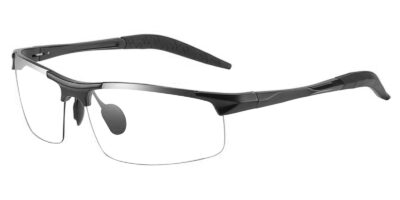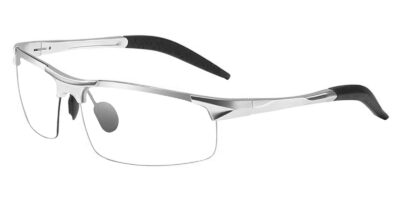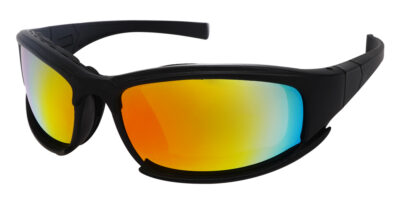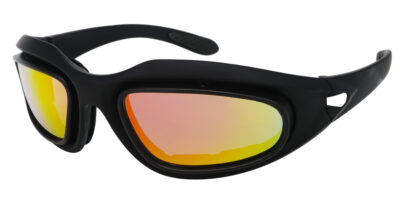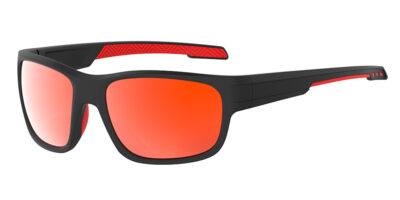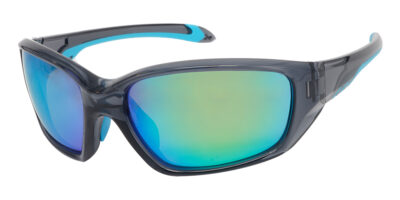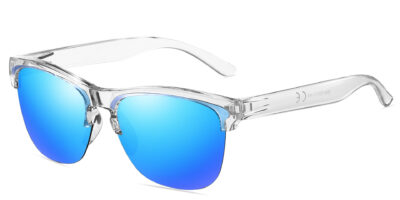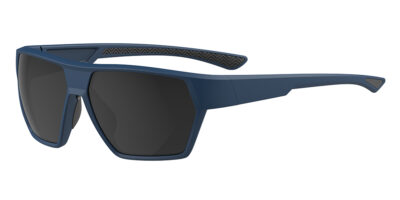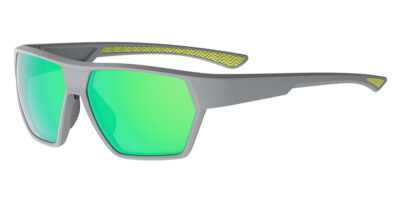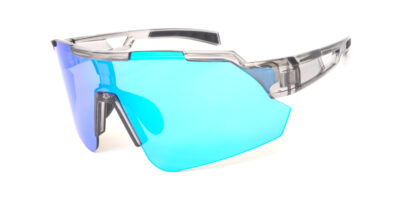
Move between indoor and outdoor spaces with Transition Safety Glasses fitted with light-adaptive lenses. The lenses respond to changing daylight, becoming darker outdoors and returning towards a clearer state when the activating light is reduced.
This collection is intended for people whose routine regularly takes them between different lighting environments. Compare frame fit, prescription availability, photochromic lens type, protective information and the expected clear and dark states before selecting a product.
Transition prescription safety glasses do not change instantly or perform identically in every environment. Their response can be affected by ultraviolet exposure, temperature, lens material and the selected technology. Review the individual product details and intended-use limitations before ordering.
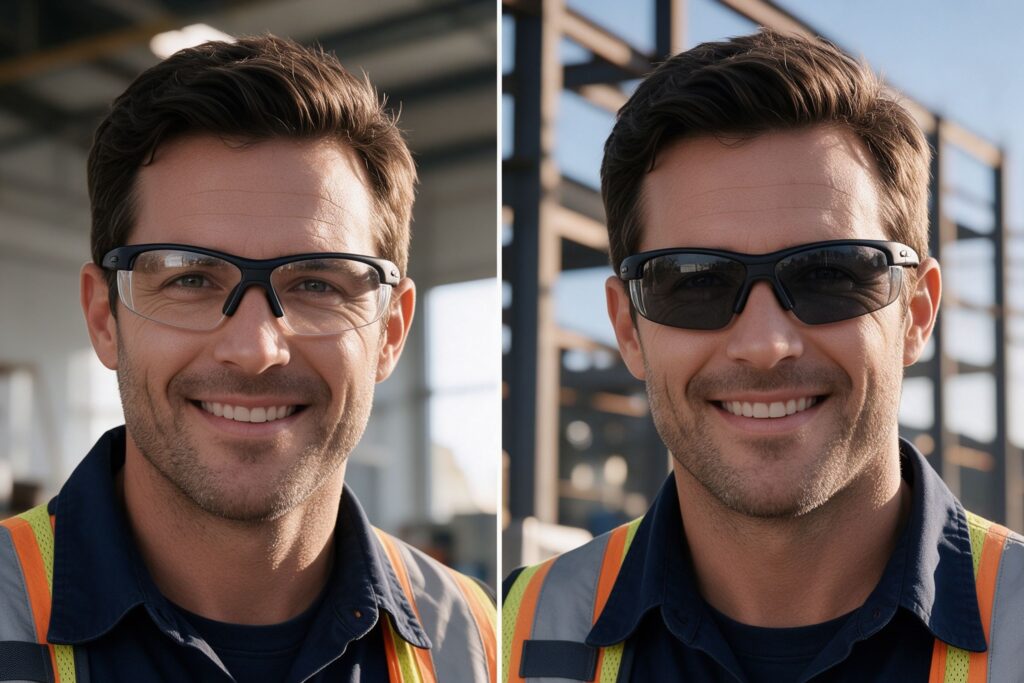
Photochromic lenses contain light-responsive molecules that react when exposed to activating wavelengths, primarily ultraviolet light. Outdoors, this reaction causes the lenses to absorb more visible light and appear darker. When the activating light is removed, the lenses gradually return towards their lighter state.
This automatic response can be convenient for people who regularly move between a building and an outdoor work area. Instead of changing between separate clear and dark lens configurations, the wearer can continue using one properly fitted product while the lenses adapt.
The change is gradual rather than immediate. A wearer entering a building after spending time in bright sunlight may notice some remaining tint while the lenses clear. Likewise, a lens may need time outdoors before reaching its darker state.
Where Transition Safety Glasses Can Be Useful
Light-adaptive lenses may suit routines involving repeated movement between indoor and outdoor locations, including:
Property inspection and maintenance
Loading and delivery areas
Landscaping and grounds work
Construction-site movement
Outdoor equipment servicing
Warehouse yards
Utility and field work
Home workshops with outdoor tasks
Suitability still depends on the hazard and the individual product. OSHA requires eye protection to be appropriate for the particular exposure, reasonably comfortable, securely fitted and compatible with the wearer’s prescription needs.
A changing tint is a visual feature. It does not by itself confirm impact performance, side coverage or suitability for a workplace. Protective information should be verified separately for each frame-and-lens combination.
What to Expect When the Lenses Change
Photochromic performance is not the same across every lens brand, material or colour. Some products become darker than others, while activation and clearing speeds can also differ.
Several environmental factors influence the result:
Ultraviolet exposure
Most standard photochromic lenses react primarily to ultraviolet light. Stronger exposure usually produces a more noticeable darkening response, while reduced exposure beneath roofs, canopies or other barriers may result in a lighter tint.
Temperature
Temperature can affect both tint intensity and response speed. Photochromic lenses may appear darker in cold conditions and less dark in hot conditions, although performance varies by technology and lens material.
Lens material and technology
Different photochromic systems use different materials and formulations. The selected product page should identify the actual option available rather than making one performance claim for the whole collection.
Time spent outdoors
The lenses need sufficient exposure to begin and continue the darkening process. Briefly stepping outside may not produce the same result as remaining in open daylight for a longer period.
Important Driving Limitations
Most standard photochromic lenses do not become as dark inside a vehicle as they do in direct outdoor conditions. Vehicle windshields block much of the ultraviolet light that activates conventional photochromic technology.
Some specialist technologies are designed to respond partly to visible light and may darken behind a windshield, but that feature must be confirmed for the exact lens option. Do not describe every product in this collection as suitable for daytime driving.
Each product page should state:
Whether the lens activates behind a windshield
Whether any tint remains in its indoor state
Whether the manufacturer approves it for driving
Whether it is suitable for nighttime road use
Any limitations relating to temperature or light exposure
Customers who need consistent glare reduction inside a vehicle should not assume that a standard photochromic option will perform like a fixed dark tint.
Not a Substitute for Task-Specific Filters
A light-adaptive lens should not be treated as a universal filter for every bright-light hazard. Welding, laser work, intense infrared exposure and other sources of hazardous radiation require protection selected for the relevant wavelength, optical density or shade requirement.
OSHA requires protection appropriate to potentially injurious light radiation and provides separate requirements for welding and laser applications. An ordinary photochromic response does not replace those task-specific filters.
The darkened appearance of a lens is not sufficient evidence of specialist protection. Use only the performance markings and manufacturer documentation stated for the selected configuration.
Transition Safety Glasses and Indoor Work
Many photochromic lenses are designed to become substantially clearer indoors because ordinary artificial lighting does not provide the same ultraviolet activation as outdoor daylight. However, a slight residual tint may remain with certain technologies.
Before using them for work performed mainly indoors, consider:
The amount of indoor light available
How often the wearer enters and leaves the building
Whether accurate colour recognition is important
Whether temporary residual tint could affect the task
Employer rules concerning variable-tint lenses
Whether the specific lens is clear enough for the working environment
Employers may have their own protective-equipment policies based on the workplace hazard assessment. Product availability does not automatically mean that a variable-tint lens is permitted for every role.
Choosing Transition Prescription Safety Glasses
Begin by confirming that the selected frame supports both your prescription and an eligible photochromic lens.
Review the following information before ordering:
Complete prescription range
Available single-vision or multifocal designs
Photochromic brand or technology
Lens colour
Indoor or inactive tint
Expected outdoor darkness
Activation behind vehicle windshields
Temperature-related performance
Frame dimensions and fit
Product-specific protective markings
Side-coverage configuration
Manufacturer care instructions
Do not assume that a product offers a photochromic option because it appears on this page. The option should be selectable during ordering and clearly shown in the completed configuration.
Clear Indoors Does Not Mean Colourless in Every Model
Some photochromic options return to a nearly clear appearance indoors, while others retain a light background tint. The result depends on the product generation, material and intended performance.
A lens designed to become darker in intense outdoor conditions or to activate partly inside a vehicle may retain more tint indoors than a standard UV-responsive option. These differences should be explained on the product page so customers can make an informed comparison.
Show realistic images of the lens in both its inactive and activated states where manufacturer-approved photography is available. Avoid using digitally darkened images that exaggerate the expected tint.
Prescription and Frame Compatibility
Not every frame can accept every photochromic prescription. Availability may be influenced by:
Sphere and cylinder values
Axis measurements
Prism requirements
Lens thickness
Lens material
Frame shape and curvature
Lens dimensions
Multifocal fitting requirements
The laboratory options available for that frame
Stronger or more complex prescriptions may require a different frame or lens material. Confirm compatibility before completing the order rather than assuming that every product supports the entire prescription range.
Collection Requirements
To keep this page focused, every listed product should:
Offer a selectable photochromic lens
Support prescription ordering where described
Identify the photochromic brand or technology
Explain indoor and outdoor performance
Disclose driving limitations
Show the relevant prescription range
Display product-specific protective information
Avoid unsupported claims about glare, impact or universal workplace suitability
Fixed-tint-only products should move to the dedicated outdoor collection. Products without a confirmed photochromic option should not remain here merely because they have a sporty appearance.
FREQUENTLY ASKED QUESTIONS
What are Transition Safety Glasses?
Transition Safety Glasses use photochromic lenses that become darker when exposed to activating outdoor light and gradually return towards a clearer state when that exposure is reduced. They combine this light-adaptive feature with the protective properties documented for the individual product.
How do Transition Safety Glasses work?
Photochromic molecules within or on the lens react primarily to ultraviolet exposure. This reaction changes how much visible light the lens absorbs, producing a darker appearance outdoors. The process reverses when the activating light is removed.
Do they change instantly?
No. Darkening and clearing happen gradually, and the speed differs by lens technology, temperature, material and surrounding light. Customers should review product-specific performance information instead of expecting one universal response time.
Do they become completely clear indoors?
Many standard options become nearly clear indoors, but some technologies retain a light background tint. The final appearance depends on the lens product and material. Check the indoor transmission or residual-tint information where available.
Do they work inside a car?
Most conventional photochromic lenses show limited darkening inside a vehicle because the windshield blocks much of the ultraviolet light needed for activation. Some specialist products respond partly to visible light and may darken behind a windshield, but this must be confirmed for the selected option.
Are transition prescription safety glasses suitable for night driving?
Suitability depends on the selected lens and the manufacturer’s instructions. Standard photochromic products are generally not activated by headlights or streetlights, but lenses with a noticeable residual tint may have additional restrictions. Check the specific product information and applicable driving requirements.
Will the lenses darken on a cloudy day?
They can respond on cloudy days because ultraviolet exposure may still be present. However, the level of darkness depends on the available UV intensity, temperature, lens material and time spent outdoors.
Does hot weather affect the tint?
Yes. Photochromic response can change with temperature. Many lens technologies become less dark in warmer conditions and darker in colder conditions, although newer products may be designed to reduce these differences.
Can every prescription be produced with a photochromic option?
No. Availability depends on prescription strength, lens material, frame shape, curvature, lens size and the manufacturing options offered for the selected product. Confirm the supported range before ordering.
Do photochromic lenses protect against every bright-light hazard?
No. Ordinary photochromic darkening does not replace the specialist filters required for welding, lasers, infrared exposure or other hazardous radiation. Select protection according to the task and the documented filter requirements.
Does the changing tint confirm that the product is safety rated?
No. Photochromic performance and protective performance are separate characteristics. Verify the frame, lens and side-protection information shown for the complete product configuration.
Can the lens remain slightly dark after coming indoors?
Yes. Clearing is gradual, so some tint may remain for a period after outdoor exposure. Certain photochromic technologies also retain a light indoor tint by design.
How should the lenses be cleaned?
Follow the care instructions supplied with the selected product. Use a clean microfiber cloth and an approved lens-cleaning solution, and avoid abrasive materials or harsh chemicals that could damage the surface treatments.
When should they be replaced?
Replace the product if the lenses become cracked, deeply scratched or difficult to see through; if the frame or side components are damaged; if the fit is no longer secure; or if the prescription changes. Contact the retailer when the photochromic response no longer performs as described within the applicable warranty period.
WE PROMISE YOU ALL THIS
Free US & Canada Shipping
Free 30-day returns, no questions asked!
Secure payments
Contact Us :Chat Online|Phone: 1-855-598-2020
|Email: service@caglasses.com